Award Winners: Most Trusted Insulation Company in Bay of Plenty
Bay Energy Solutions is the Bay of Plenty’s award-winning insulation company.

Ceiling insulation slows heat escaping through the top of your home, helping rooms stay warmer in winter and reducing heat entering from a hot roof space in summer. If your ceiling has little or no insulation, it is often one of the most useful places to start improving your home’s comfort and energy efficiency.
Ceilings, walls and floors all contribute to a well-insulated home. The best result comes from looking at them together, but an accessible roof space can make ceiling insulation a practical first upgrade.
Bay Energy Solutions provides insulation advice, supply and installation in Rotorua, Tauranga and surrounding areas. This guide explains the benefits, product choices, R-values and installation considerations, so you can make an informed decision about your home.
Ceiling insulation is material installed above the ceiling lining to reduce heat transfer between your living spaces and the roof space or outdoors.
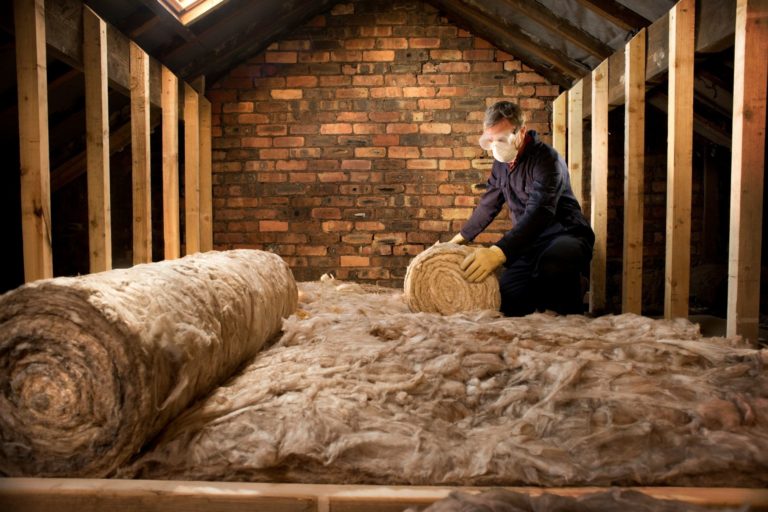
In a typical house with an accessible pitched roof, insulation can be fitted between ceiling joists, with an additional layer over the framing where the specified system allows. Homes with sloping ceilings or very shallow roof cavities need a different approach.
Insulation does not generate heat. It helps retain warmth from sunlight and your heating system, so that warmth is not lost as quickly.
Warm air rises, but heat can move in any direction from a warmer area to a colder one. During winter, the temperature difference between your rooms and the roof space creates a route for heat loss through the ceiling.
BRANZ estimates that about 35% of heat loss from an average uninsulated home occurs through the ceiling and roof. The proportion varies with the house, its construction and insulation elsewhere.
That is why a poorly insulated ceiling is often a priority. Insulating it reduces a major source of heat loss, although it will not eliminate heat escaping through windows, walls, floors or draughts.
Effective ceiling insulation helps rooms retain warmth for longer. This can make it easier to maintain a comfortable temperature, particularly when the existing insulation is missing or incomplete.
Insulation also slows heat moving from a hot roof space into the rooms below. It can help with summer comfort, although shading, ventilation and heat entering through windows still matter.
A well-insulated home generally needs less energy to maintain the same indoor temperature. Your actual savings depend on the starting condition of the house, heating and cooling equipment, energy prices and how you use your home.
Glasswool and polyester are two common options. Both can provide effective, long-lasting thermal insulation when the product suits the ceiling and is installed correctly.
Choosing between them involves more than the material name. Compare the specified R-value, installed thickness, fit, fire properties, acoustic information and total installed price.
| Consideration | Glasswool | Polyester |
|---|---|---|
| Material | Glass fibres; some products contain recycled glass | Polyester fibres; some products contain recycled plastic |
| Formats | Ceiling segments and rolls, depending on the range | Ceiling blankets and specialist sections, depending on the range |
| Thermal performance | Choose the required R-value and suitable dimensions | Choose the required R-value and suitable dimensions |
| Sound absorption | Can contribute to acoustic performance | Can contribute to acoustic performance |
| Main comparison | Product specification, installation requirements and installed cost | Product specification, installation requirements and installed cost |
Glasswool, also called fibreglass insulation, is widely used and can be a cost-effective option. Bay Energy Solutions’ preferred glasswool brand is Earthwool from Knauf Insulation.
Earthwool products are non-combustible, made using up to 80% recycled glass, and manufactured with a binder containing no added formaldehyde. Its range offers both thermal and sound-absorbing properties.
Recycled content and recyclability are different considerations. If disposal or recycling is important to your decision, ask about an available collection route for the particular product before assuming it can go into household recycling.
Bay Energy Solutions also uses Mammoth insulation. Mammoth’s ceiling blankets are made from polyester, include recycled fibres and are described by the manufacturer as non-irritant and non-toxic.
Polyester is an option for homeowners interested in thermal comfort and sound absorption. However, it is not automatically quieter or thicker than every glasswool product. Compare the actual products and, where noise is a priority, the tested performance of the complete ceiling system.
Both materials need the correct installation arrangement. A product’s ability to hold its shape does not mean it can bridge any gap or be installed without following its support requirements.
Handling characteristics vary between products. Check the manufacturer’s safety information if you have sensitivities, and follow its protective-equipment guidance. A roof space may also contain dust or contamination unrelated to the insulation itself.
Earthwool states that its insulation does not sustain vermin or attract insects. That does not make a roof space pest-proof. Animals can still enter a building and disturb insulation, so pest access needs separate attention.
Neither format is best for every roof space.
Segments or batts fit into individual spaces between framing. Accurate sizing helps avoid gaps or bunching.
Blankets come in rolls. Suitable systems can use a second layer across the first to cover framing and reduce heat bypassing insulation through the timber. This is known as thermal bridging.
Blankets can be useful for top-ups, but the existing material, available height and required clearances must be checked first. Loose-fill insulation is another option in some homes and needs a product-specific assessment.
For an overview of these formats, see EECA’s home insulation guidance.
R-value measures resistance to heat flow. A higher R-value means greater thermal resistance under the stated conditions.
The appropriate specification depends on whether you are upgrading an existing owner-occupied home, insulating a rental or undertaking a new build or consented renovation.
There is no single product R-value that is the best choice for every retrofit. Roof construction, available space, existing insulation, local climate and budget all affect the recommendation.
Ask for a comparison of suitable options and the additional installed cost of higher performance. Bay Energy Solutions uses Mammoth and Knauf products with options above the basic Healthy Homes ceiling thresholds.
Under the Healthy Homes insulation standard, the general ceiling minimums for new or topped-up insulation in existing rentals are:
| Healthy Homes climate zone | Minimum ceiling R-value |
|---|---|
| Zone 1 | R2.9 |
| Zone 2 | R2.9 |
| Zone 3, including the central North Island area shown on the official map | R3.3 |
Check the property’s location against the Tenancy Services map. R3.3 is not a universal minimum for every ceiling project.
Existing ceiling insulation installed before 1 July 2016 generally needs to be at least 120mm thick and in reasonable condition. Thinner insulation can qualify where the landlord can demonstrate the required original R-value and that thickness has reduced by no more than 30%.
Specific exemptions apply. These include some areas that a professional cannot safely or reasonably access and insulate. A small hatch alone does not establish an exemption.
These projects must meet the Building Code requirements applicable to the work and its selected compliance pathway. The Healthy Homes retrofit minimums should not be used as the specification for a new house.
Product R-value and construction R-value are different. Product R-value describes the insulation material. Construction R-value describes the complete building element, including the effect of framing and other components.
Your designer should confirm the required roof system before products are ordered. Refer to MBIE’s current H1 guidance.
Often, yes. Existing insulation that is dry, clean, suitably fitted and in reasonable condition may be able to remain beneath a compatible new layer.
An assessment should establish whether the old material can contribute to the upgraded system. Damaged or contaminated insulation may need removal, and any leak or pest problem should be addressed first.
The aim is a well-fitted system with suitable coverage and clearances. Simply laying new material over gaps, displaced pieces or damp insulation may leave the underlying problem unresolved.
Arrange an assessment if:
A cold house does not prove the ceiling insulation is at fault. Draughts, windows, other uninsulated areas, moisture and heating capacity may also contribute.
You do not need to climb into the roof yourself. A professional assessment is a practical way to establish what is there and what needs improving.
Insulation needs to fit the building properly to deliver its intended performance. Gaps allow heat to bypass it, while excessive compression can reduce the thermal resistance of bulk insulation.
A good installation accounts for:
Installation should follow the manufacturer’s instructions and the relevant requirements of NZS 4246:2016. MBIE’s installation guidance explains why fitting and clearances matter.
Only where the fitting’s classification and instructions permit it. Some older fittings require clear space, while suitable modern fittings allow insulation contact or coverage under specified conditions.
Do not assume every LED fitting can be covered. Drivers and transformers can have separate requirements. An electrician can identify unsuitable fittings and advise on replacement options. See MBIE’s downlight guidance.
Often there are options, but the work can be more involved than insulating an accessible roof space.
Skillion roofs, cathedral ceilings and shallow cavities may not have enough room for a conventional retrofit. Improving insulation when roofing or ceiling linings are being replaced can provide better access.
The system needs to account for moisture management and available depth. Squeezing a thick product into a narrow cavity is not a substitute for a suitable design. MBIE discusses restricted roof-space access in its retrofit guidance.
Insulation can help internal surfaces stay warmer, but it does not remove moisture or fix leaks. Condensation occurs when moist air meets a sufficiently cold surface.
If your home is damp, consider insulation alongside effective kitchen and bathroom extraction, ventilation, heating and repairs to moisture sources. Mould or dampness in a roof space warrants investigation before it is covered with new insulation.
Insulation, ventilation and moisture control each have a role in a comfortable home.
If the ceiling is bare, it is often the sensible starting point. If it already has effective coverage but the suspended floor is uninsulated, underfloor insulation may be the next useful improvement.
Assess both areas before choosing where to spend your budget. Roof leaks, electrical issues or other defects may need attention before insulation work begins.
Our underfloor insulation guide explains the options beneath your home. You can also explore our home insulation services for advice on the wider property.
The most useful price is an installed quote based on your ceiling, rather than a material price that assumes straightforward access and no preparation.
Ask the quote to identify:
When comparing quotes, check that they cover the same work. A lower price may reflect a different specification or an area left out of the installation.
Bay Energy Solutions offers free home assessments to help you understand suitable options and the cost for your property.
It helps retain available warmth, including heat from the sun. It cannot guarantee a comfortable indoor temperature without heating, particularly during cold weather. Think of it as helping your heat go further.
Not necessarily. Products can have different R-values at the same thickness. Choose the required performance and a product that fits the space without inappropriate compression or loss of clearances.
It can help absorb sound within a building assembly. Results depend on the product, ceiling linings, construction and sound paths. If noise is a main concern, ask for advice on a tested acoustic system rather than relying on thermal R-value alone.
Modern products are designed for long-term use, but condition matters more than age alone. Check the product warranty and arrange an inspection after leaks, pest damage or work in the roof space.
Retrofitting insulation into an existing ceiling is generally exempt from building consent. Associated structural alterations or wider building work may have separate requirements. MBIE explains the exemption in its thermal insulation guidance.
Keep product and installation information, inspection details and evidence supporting any exemption. Ceiling insulation information is part of the Healthy Homes compliance statement. Good records make later inspections and tenancy documentation easier.
Not sure whether your ceiling insulation is effective, or whether a top-up would help? Bay Energy Solutions offers free home assessments in Rotorua, Tauranga and surrounding areas.
A member of our team can visit your property, assess the existing insulation and explain suitable options. We can help you weigh up product performance, relevant requirements and cost so you can make a practical decision for your home.